

Introduction: Why Domain Valuation Matters More Than Ever in 2026
Domain names have never been more valuable—or more confusing to price.
With marketplaces listing millions of domains, AI-generated appraisal tools giving inconsistent estimates, and sellers attaching inflated “dream prices,” beginners have a hard time figuring out what a domain is actually worth. That is the main reason why we thought to write about how to value a domain name.
In 2026, accurate domain valuation isn’t just a skill. It’s an advantage.
Whether you’re buying your first domain, evaluating an investment, pricing your domain for sale, or managing a growing portfolio, knowing how to value a domain correctly will help you:
- avoid overpaying
- avoid selling too cheap
- spot undervalued opportunities
- increase ROI
- reduce losses
- negotiate with confidence
This guide breaks domain valuation into clear, beginner-friendly steps, with real investor logic, market data, and practical examples you can start using today. If you’re trying to learn how to value a domain name in 2025, this guide walks you through every method beginners can trust.
Let’s begin.
Table of Contents
What Does “Domain Value” Mean?
The value of a domain represents the price a real buyer is willing to pay—not what automated tools guess, and not what sellers wish for.
Domain value comes from a combination of:
- Keyword strength
- Commercial intent
- Brandability
- Search volume
- Market trends
- Comparable sales
- TLD (extension) quality
- Liquidity & resale potential
A domain’s value is never determined by one factor. It’s an equation of all the above.
Why Most New Investors Misjudge Domain Values
Beginners usually make one of these mistakes:
1. Depending entirely on automated appraisal tools
AI appraisal tools are useful, but:
- they ignore brandability
- they misread trends
- they overvalue weak names
- they undervalue rare names
A single automated number is NOT a valuation.
2. Trusting marketplace prices
Marketplaces often show hope pricing, not market pricing.
Just because someone lists a domain for $30,000 does not mean it’s worth $30,000.
3. Thinking length = value
Short names often perform well, but clarity + relevance matter more.
4. Ignoring TLD quality
A keyword may be amazing in .com but worthless in a niche extension.
5. Overestimating brandability
Just because a name sounds good to you doesn’t mean end-users want it.
This guide will help you avoid these beginner traps.
How do beginners actually learn how to value a domain name correctly? This guide will help you avoid these beginner traps.
The 7 Core Factors That Determine a Domain’s Value
This is the heart of domain appraisal.
Memorize these, and you’ll instantly outperform most beginners.
1. Keyword Strength & Commercial Intent
The FIRST question:
Does this domain include a real keyword people search for?
Examples of high-value keywords:
- loans
- crypto
- insurance
- ai
- cloud
- payment
These keywords drive industries worth billions.
Check Keyword Intent
There are 3 types:
- Commercial intent (highest value)
- Navigational intent (medium value)
- Informational intent (low value)
Example:
- BuyDomains.com → high commercial intent
- HowToGrowTomatoes.com → informational only
Tools to Check Keyword Value
- Google Keyword Planner
- Ahrefs
- SEMrush
Look for:
- high CPC
- good search volume
- buyer keywords
Domains built around high-value keywords consistently outperform others.
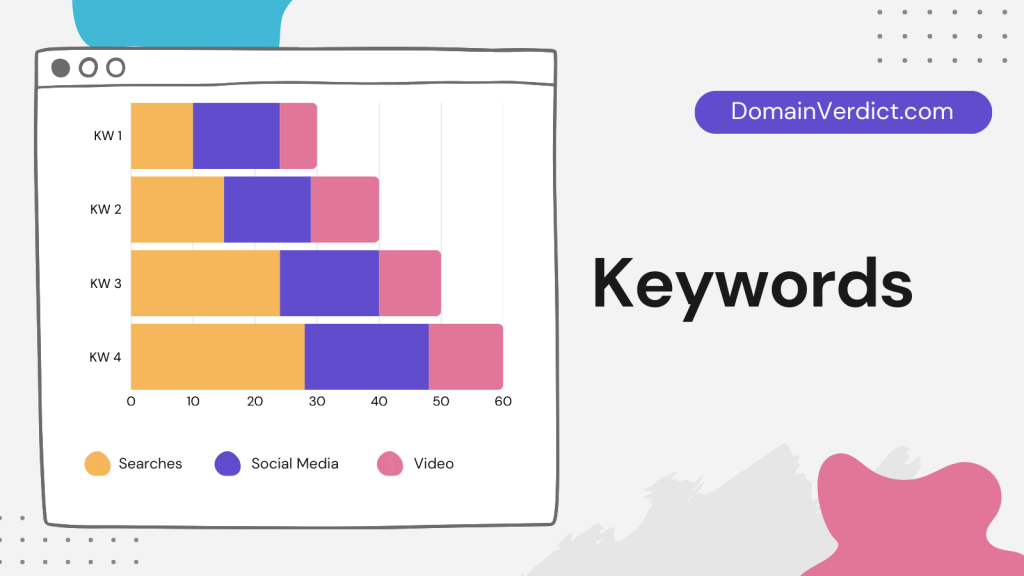
2. Brandability
Brandability is the secret multiplier of domain value.
A brandable domain must be:
- easy to spell
- easy to pronounce
- visually clean
- memorable
- trademark-safe
- industry-appropriate
Examples of strong brandables:
- Coinbase
- Stripe
- Zoom
- Notion
- Shopify
Brandability often beats exact-match keywords.
Example: “Tesla” > “ElectricCars.com”
3. Search Volume & Industry Demand
A domain tied to a growing industry gains natural value.
Industries with rising demand in 2026 include:
- AI
- fintech
- cybersecurity
- cloud computing
- wellness
- sustainability
- education tech
Search volume tells you:
- how many people want the keyword
- how big the industry is
- how strong buyer interest is
Higher demand = higher valuation.
4. Comparable Sales (Comps)
You cannot value domains without checking comps.
Use ONLY reliable sources:
- NameBio.com
- DNJournal
- Historical marketplace sales
Compare:
- same keyword
- similar length
- similar structure
- same TLD
- same industry
Example:
If “CryptoMint.com” sold for $12,000, then “CryptoWave.com” might be in a similar range — depending on brandability.
Comps are the backbone of valuation.
5. Extension (TLD) Strength
Not all TLDs are equal.
.com is king.
95% of high-value sales are in .com.
Strong ccTLDs:
- .de
- .co.uk
- .ai
- .io
Weak TLDs:
- random new extensions
- novelty TLDs
- overly specific niches
A strong keyword in .com can be worth thousands.
The same keyword in .info may be worth almost nothing.
6. Market Trends
Domains follow industry and naming trends.
Examples:
- AI prefixes/suffixes (2022–2025)
- Short one-word brands (2010–2020)
- “Tech” and “Cloud” names (2015–2021)
When industries grow, domain values grow.
When industries die, domain values collapse.
Example:
- “NFT” domains peaked early 2022
Trend timing matters.
7. Liquidity & Resale Potential
This is often ignored by beginners.
Liquidity = how easily the domain can be sold.
High liquidity domains:
- short
- .com
- premium keywords
- strong brandables
- high demand niches
Low liquidity domains:
- long
- hard to spell
- weak extensions
- niche-specific
- informational only
Liquidity decides:
- how fast you can sell
- how much you must discount
- how safe your investment is
This is crucial for domain flippers.
How to Value a Domain Step by Step (Beginner Method)
Here is a simple, beginner-friendly method you can use today. These are the core factors used when learning how to value a domain name accurately.
Step 1: Check the Keyword
Use Google Keyword Planner.
Find:
- search volume
- CPC
- competition
- keyword category
If the keyword has no commercial demand → value drops immediately.
Step 2: Test Brandability
Ask yourself:
- Can a startup use this name?
- Is it easy to type?
- Does it pass the radio test (hear → type)?
- Is it visually clean?
- Any trademark risk?
If yes → stronger valuation.
Step 3: Compare Sales
Go to NameBio and search:
- same keyword
- same structure
- same length
- same TLD
If similar domains sold for $2,500–$5,000, that’s your realistic range.
Step 4: Analyze the TLD
- .com = top value
- strong ccTLDs = medium
- niche extensions = low
TLD changes valuation massively.
Step 5: Check Market Demand
Search for:
- similar brand names
- companies in that niche
- startups that might want the name
If the domain fits a strong business model → higher value.
Step 6: Evaluate Liquidity
Ask:
- Can this domain sell quickly?
- Or is it a waiting game?
High liquidity = safer investment.
Step 7: Decide the Valuation Range
Beginner formula:
Low end = wholesale value
Mid-range = investor value
High end = end-user value
Example:
A domain might have:
- $300 wholesale value
- $1,200 investor value
- $3,000 end-user value
Different buyers = different prices.
Quick Pricing Examples for Beginners
These real examples help beginners understand how to value a domain name using comps, brand strength, and market demand.
Example 1: GIJI.com
Type: 4-letter .com
Strengths:
- Super short
- Brandable
- Easy to pronounce (“gee-gee”)
- Rare LLLL.com composition
- Works for apps, fintech, AI, lifestyle brands
- Excellent liquidity in domainer market
Weaknesses:
- Not keyword-based
- Needs the right buyer to unlock full value
Market Logic:
LLLL.com names remain a strong asset class.
Brandable 4-letter .coms with clean consonant/vowel patterns sell consistently.
Comparable Sales:
- LLLL.com brandables commonly sell $1,500–$15,000
- Rare patterns go higher
Valuation:
- Wholesale: $600–$1,200
- Investor price: $1,500–$3,000
- End user: $5,000–$12,000+
Example 2: JobHawk.com
Type: Two-word brandable .com (job + hawk)
Strengths:
- Strong keyword (“job”)
- Hawk = speed, accuracy, hiring insight
- Excellent meaning fit for HR, recruitment, job boards
- Huge industry with high CPC and commercial intent
- Very memorable brand name
Weaknesses:
- Two-word names require strong branding to maximize value
Market Logic:
Job-related domains have high commercial value.
Names that imply speed/insight (hawk) perform extremely well for hiring startups.
Comparable Sales:
- JobFinder.com: high valuation class
- Talent-related brandables typically $2,500–$15,000
Valuation:
- Wholesale: $250–$500
- Investor price: $500–$1,200
- End user: $2,000–$20,000+
Example 3: Altina.ai
Type: Brandable + AI keyword
Strengths:
- AI extension with direct relevance
- “Altina” is short, feminine, brandable
- Works for SaaS, automation, assistants, analytics
- .ai still strong for startup branding in 2025
Weaknesses:
- Not a dictionary word
- Value capped by niche extension
Market Logic:
.ai remains valuable only when:
- the name is truly brandable
- the term fits AI/SaaS use cases
- the brand sounds modern and simple
Altina.ai checks these boxes.
Comparable Sales:
Brandable .ai sales typically range $500–$8,000 depending on demand.
Valuation:
- Wholesale: $80–$150
- Investor price: $150–$400
- End user: $1000–$10,000+
Avoid These Common Beginner Mistakes
1. Buying domains nobody wants
If there’s no buyer type, there’s no value.
2. Buying long, complex names
Length kills brandability.
3. Assuming every .com is valuable
Most .com combinations are worth $10–$50.
4. Ignoring trademark risks
One trademark issue = domain worthless.
5. Buying based on your personal taste
Domains must appeal to business buyers, not you.
Should You Use Automated Domain Appraisal Tools?
Most beginners misunderstand how to value a domain name because they rely on automated tools alone. Automated tools are helpful for:
- rough estimates
- identifying keywords
- quick comparison
But they often miscalculate because:
- they don’t understand brandability
- they rely on algorithmic patterns
- they overvalue random extensions
- they misinterpret comps
Use them as:
“Indicators, not valuations.”
When You Should Get a Professional Domain Appraisal
A professional valuation is needed when:
- buying a domain over $500
- selling a domain over $1,000
- negotiating with a buyer
- pricing a portfolio
- unsure whether to buy/avoid
- comparing two potential investments
A small appraisal fee can prevent large mistakes.
Final Thoughts: Domain Valuation Is a Skill You Can Learn
Unlike crypto or stocks, domain valuation is logical, repeatable, and learnable.
By understanding:
- keyword value
- brandability
- comps
- trends
- TLD strength
- liquidity
…you can estimate domain value confidently and avoid the common traps beginners fall into.
In 2025, the domain industry rewards those who make informed decisions—not emotional ones. Now you know how to value a domain name using real data and market logic instead of guesswork.
If you want a faster, expert-reviewed appraisal that includes comps, brandability scoring, liquidity analysis, and a buy/sell verdict, getting a professional domain valuation is often the smartest move.