
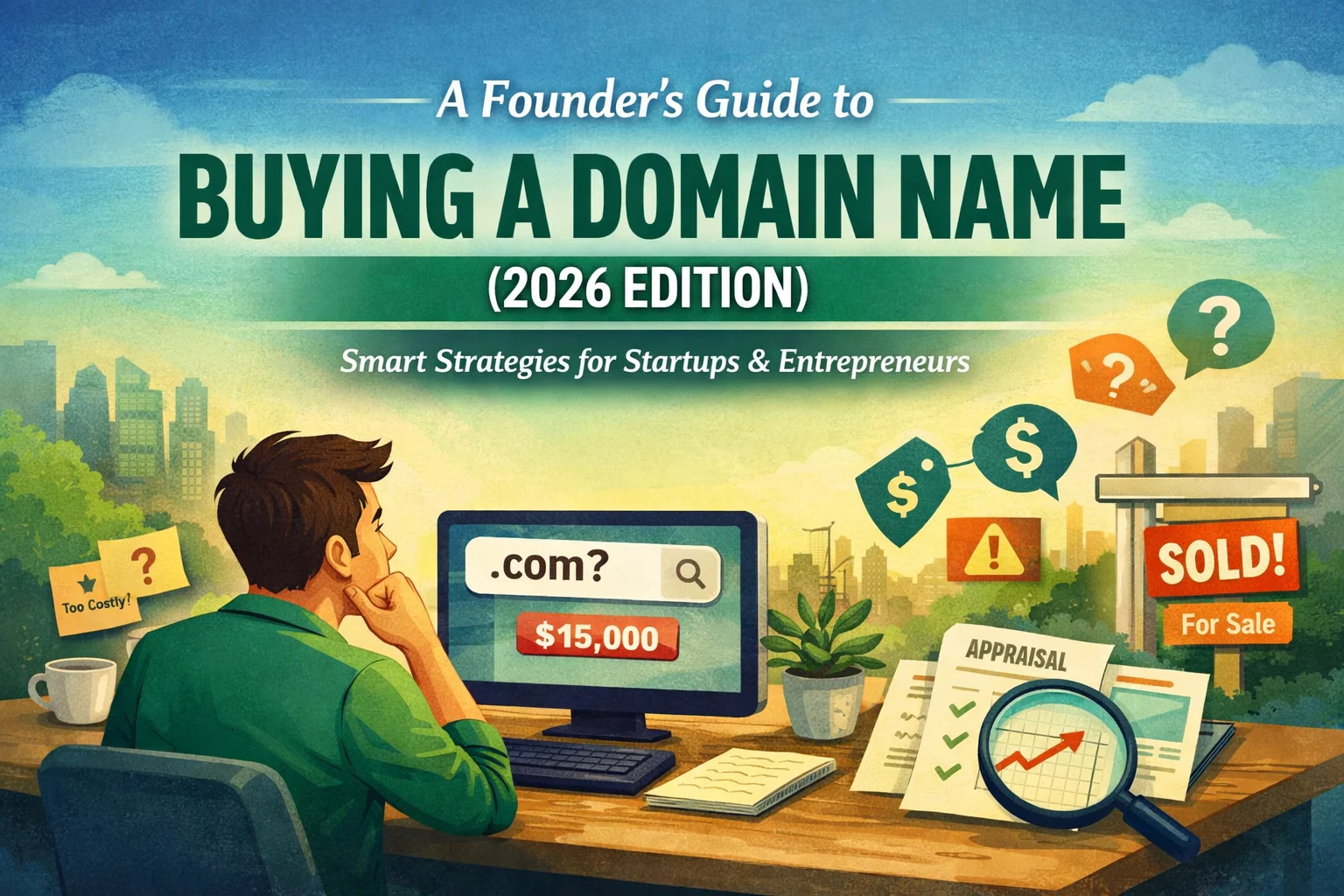
Buying a domain name in 2026 is no longer a simple registration decision.
For founders and business owners, buying a domain name often involves uncertainty, pressure, and the fear of overpaying. Whether you’re launching a startup, rebranding a business, or securing a name for future growth, understanding how buying a domain name really works can save you from costly mistakes.
This guide is written specifically for non-domainers—founders, entrepreneurs, agencies, and small businesses who want clarity and confidence when buying a domain name, without getting lost in technical or investor-focused advice.
Table of Contents
Why Buying a Domain Name Feels So Difficult Today
Many founders describe buying a domain name as frustrating or confusing. The reasons are simple:
- The best names are already taken
- Sellers ask high prices with little explanation
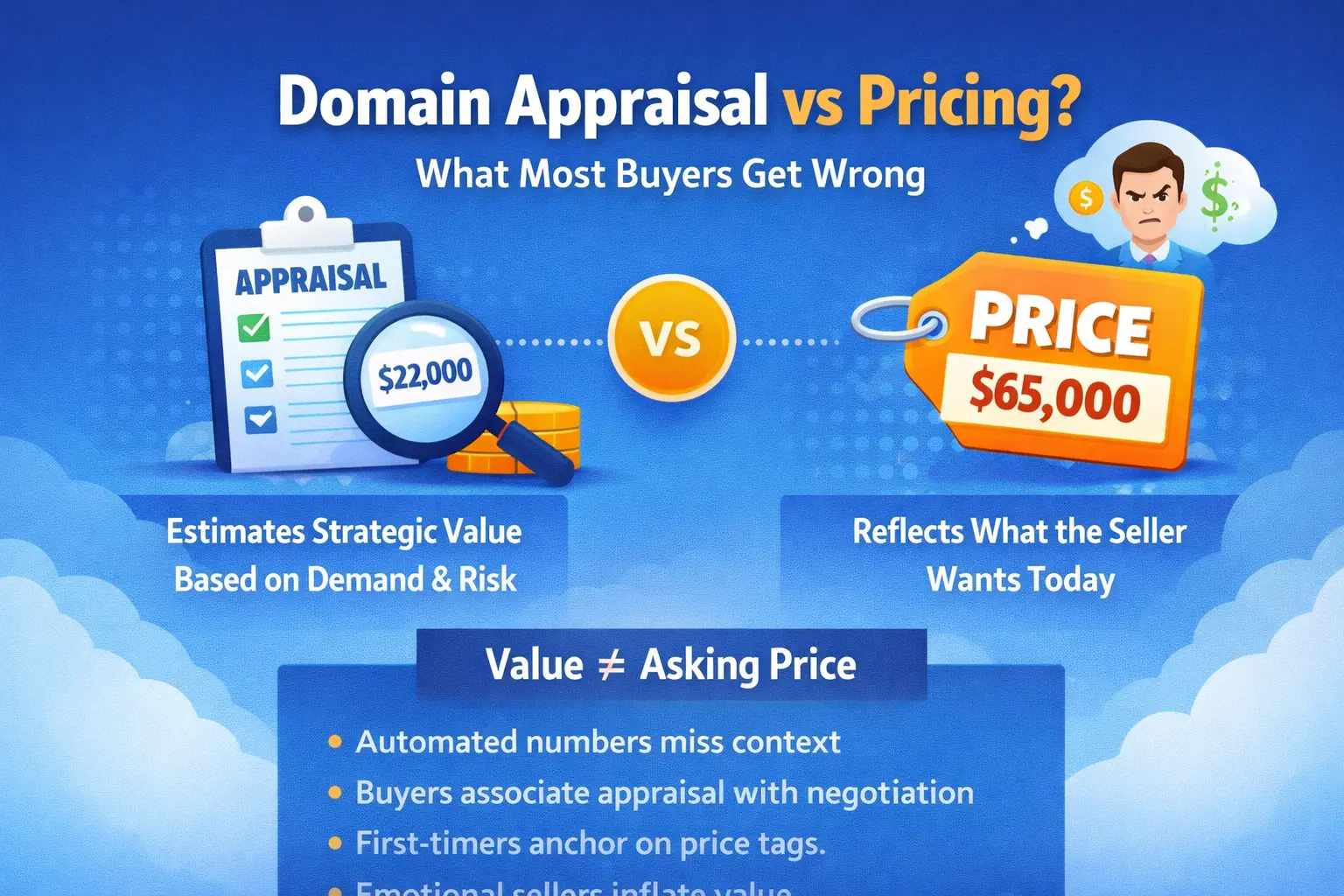
- Automated tools give conflicting values
- Advice online is written for domain investors, not businesses
As a result, founders often feel rushed into buying a domain name they’re unsure about—or walk away from a name that may actually be right for them.
The goal of this guide is to help you make a calm, informed decision when buying a domain name.
Buying a Domain Name: What You’re Actually Paying For
When buying a domain name, you’re not just paying for letters and an extension. You’re paying for:
- Brand credibility
- Memorability
- Trust with customers
- Ease of marketing
- Long-term flexibility
A strong domain name quietly supports your business every day.
A weak one becomes a permanent friction point.
That’s why a domain name purchase should be treated as a business decision, not a technical task.
The Four Practical Types of Domain Names (Founder View)
When buying a domain name, most options fall into one of these categories:
1. Brandable Names
These are invented or modified words. When buying a domain name like this, the value depends on clarity, sound, and how easily people remember it.
2. Keyword-Based Names
These include real words related to an industry. Buying a domain name with keywords often feels safer, but these names are also the most frequently overpriced.
3. Short or Acronym Names
Short names can be powerful, but buying a domain name in this category only makes sense if it aligns with your brand direction and budget.
4. Compromised Names
Long names, awkward spellings, or weak extensions. Buying a domain name here may seem cheap upfront, but often leads to regret later.
Most founders regret option #4.
How Much Should You Spend When Buying a Domain Name?
There’s no universal price—but there is logic.
When buying a domain name, consider:
- Your stage of business
- Your branding budget
- The cost of changing names later
A helpful rule of thumb:
- Early-stage founders: spend what you won’t need to “fix” later
- Funded startups: buy once, buy right
- Small businesses: prioritize trust and clarity
The real risk isn’t spending too much—it’s buying without understanding why the price exists.
Why Automated Tools Don’t Help Much When Buying a Domain Name
Many founders rely on automated appraisal tools when buying a domain name. The problem is that these tools can’t evaluate:
- Brand fit
- Customer perception
- Naming strategy
- Emotional response
- Business intent
This leaves buyers stuck between a tool’s estimate and a seller’s asking price, with no clear way to judge reality.
This uncertainty is where most bad domain decisions are made.
The 5 Questions to Ask Before Buying a Domain Name
Before buying a domain name, ask yourself:
- Would I confidently say this name to customers?
- Does it look credible on a website and email address?
- Will it limit my business in the future?
- Is the price based on logic or hope?
- If I don’t buy it, will I regret it—or feel relieved?
If you can’t answer these clearly, you’re guessing.
When to Negotiate and When to Walk Away
When buying a domain name, negotiation makes sense if:
- The name fits your business
- Comparable names exist
- The seller is flexible
You should walk away if:
- The seller only references automated tools
- The name needs explanation
- The price creates stress
- There’s no clear business case
Walking away from the wrong domain is a smart decision—not a failure.
Why a Second Opinion Matters When Buying a Domain Name
Founders routinely seek advice for:
- Legal contracts
- Hiring decisions
- Marketing strategy
Yet buying a domain name—often a four- or five-figure decision—is frequently done alone.
A neutral second opinion helps:
- Confirm whether you’re overpaying
- Identify hidden risks
- Provide negotiation leverage
- Bring peace of mind
This is why professional evaluations exist: to support buyers, not to impress investors. Many founders choose to get a neutral second opinion before buying a domain name—especially when the asking price is high or the decision feels uncertain.
A professional domain evaluation helps confirm whether a price is reasonable, highlights potential brand or extension risks, and provides clarity on whether to buy, negotiate, or walk away. Services like DomainVerdict exist specifically to support non-domainers with clear, plain-English guidance—without relying on automated appraisal guesses.
Buying a Domain Name With Confidence in 2026
Buying a domain name should never feel rushed or unclear. The smartest founders slow down, validate their assumptions, and make decisions based on clarity—not pressure.
A good domain supports growth quietly.
A bad one becomes a long-term burden.
If you ever feel uncertain when buying a domain name, that hesitation is a signal to pause and validate before committing.
Further Reading
While researching domain buying patterns, pricing mistakes, and buyer psychology, many of the insights in this guide were developed further in my book, Buy and Sell Domain Names for Profit.
The book goes deeper into real-world domain pricing behavior, negotiation dynamics, and the common errors first-time buyers make when buying a domain name—especially under pressure.
This is optional reading for those who want a deeper understanding beyond this guide.
Is buying a domain name an investment or a business expense?
For most founders, buying a domain name is a business decision, not an investment. The goal is brand clarity, trust, and long-term usability—not resale value.
How do I know if I’m overpaying when buying a domain name?
If the seller relies only on automated appraisals, avoids explaining comparable sales, or pressures you to decide quickly, those are common signs of overpricing.
Are automated domain appraisal tools reliable for buying decisions?
Automated tools can provide rough signals, but they don’t account for brand fit, business intent, or buyer perception. They should not be used alone when buying a domain name.
Should I buy a cheaper alternative if the perfect domain is expensive?
Sometimes yes—but cheaper alternatives can create long-term branding and trust issues. The real question is whether the compromise will cost more over time than the upfront savings.
When should I get a professional domain evaluation?
It makes sense to get a professional evaluation when buying a domain name with a high asking price, when comparing multiple options, or when you feel uncertain about the decision.