
If you’re a founder asking how much should I pay for a domain, you’re probably already frustrated.
You’ve seen:
- domains listed for $1,299 that feel random
- others priced at $75,000 with no explanation
- automated appraisals that don’t match reality
- advice that ranges from “never pay more than $500” to “your domain is everything”
None of that helps when you actually have to make the call.
In 2026, the right answer to how much should I pay for a domain depends less on rules and more on context. This article breaks that context down without assuming you want to become a domainer.
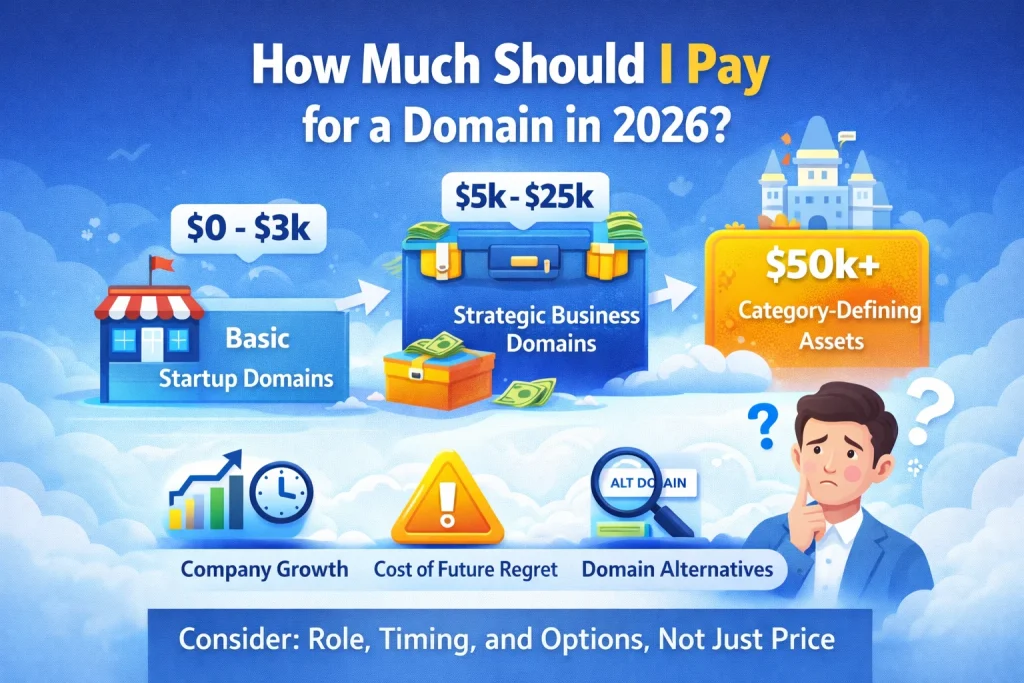
Table of Contents
The Wrong Way Most People Think About Domain Cost
Most first-time buyers approach this backwards.
They start with:
- a budget number
- a comparison to other domains
- or a tool-generated valuation
Then they try to justify the decision after the fact.
That’s how people end up either:
- overpaying for weak domains
- or underbuying and regretting it later
Before asking how much should I pay for a domain, the better question is:
What role will this domain play in my business over the next five years?
Price only makes sense once that’s clear.
The Real Price Ranges
Let’s ground this.
In 2026, most legitimate business-use domains fall into these ranges:
$0–$100: Hand-Registered or Drop Domains
Good for:
- experiments
- internal tools
- side projects with no brand risk
Bad for:
- funded startups
- anything customer-facing long term
If you’re building a serious company and asking how much should I pay for a domain, this tier usually creates hidden costs later.
$500–$3,000: Early-Stage Brand Domains
This is where many startups land.
Good for:
- bootstrapped founders
- pre-revenue products
- MVP-stage companies
This range often answers how much should I pay for a domain when:
- alternatives are acceptable
- category leadership isn’t the goal yet
- capital discipline matters
$5,000–$25,000: Strategic Business Domains
This is the most misunderstood range.
These domains:
- remove compromise
- signal seriousness
- reduce rebrand risk
For many founders, this is uncomfortable but correct answer to how much should I pay for a domain when the name affects trust, conversion, or fundraising optics or your startup is on the wrong domain.
$50,000+: Category-Defining Assets
This tier is not about logos or vibes.
It’s about:
- defensibility
- dominance
- long-term positioning
If you’re asking how much should I pay for a domain and this range applies, you’re not buying a name. You’re buying leverage.
Most companies should not be here. Some absolutely should.
What Actually Determines How Much You Should Pay
Here’s what matters more than list prices.
1. How Central the Domain Is to Your Brand
If the domain is your brand, the cost ceiling rises.
If it’s a supporting asset, it doesn’t.
Many founders overpay because they emotionally inflate importance. Others underpay because they underestimate future visibility.
2. Quality of Available Alternatives
One of the most practical ways to answer how much should I pay for a domain is to list your real alternatives.
If the alternatives:
- feel awkward
- need explanation
- introduce confusion
Then the primary domain is more valuable than it looks on paper.
If alternatives are clean and credible, you have leverage.
3. Timing in Your Company Lifecycle
Timing changes everything.
Pre-funding:
- domains are cheaper
- leverage is higher
Post-funding:
- risk tolerance drops
- prices tend to rise
- walking away becomes harder
Founders often ask how much should I pay for a domain too late, when the answer has already gone up.
4. Cost of Future Regret
This is the part tools can’t price.
Ask yourself:
- What happens if a competitor acquires this domain?
- What does a rebrand cost in two years?
- How much distraction does domain uncertainty create?
Sometimes the right answer to how much should I pay for a domain is simply “less than the cost of fixing this later.”
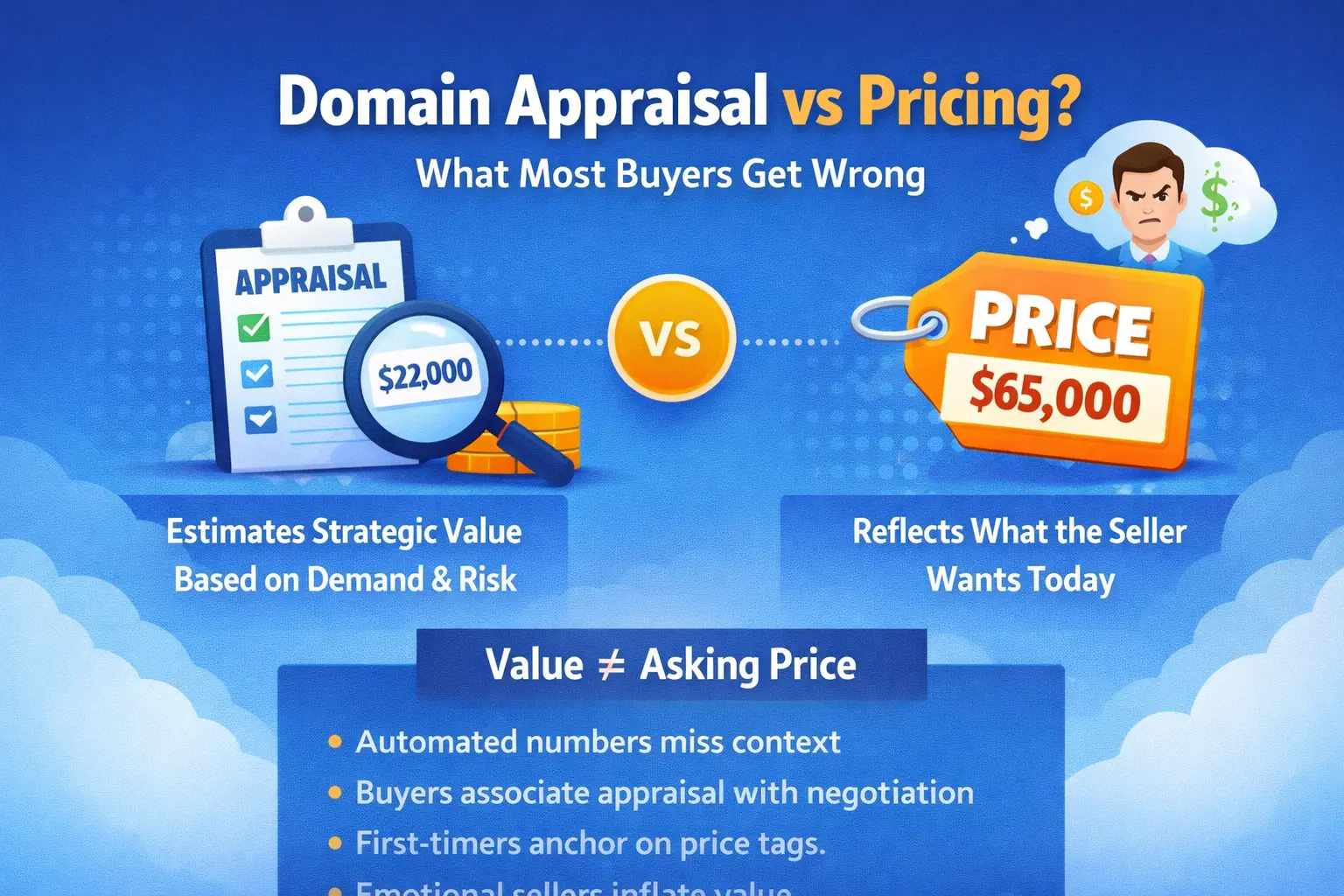
Why Appraisals Don’t Answer This Question Alone
Automated appraisals don’t know:
- your business model
- your growth plans
- your investors
- your risk tolerance
They can inform context, but they cannot decide how much should I pay for a domain for your specific situation.
That decision is strategic, not statistical.
Common Founder Mistakes to Avoid
- Anchoring on appraisal numbers
- Comparing unrelated domains
- Treating price as a proxy for quality
- Over-optimizing for savings
- Assuming “we can upgrade later”
Later usually costs more. And hurts more.
A Simple Decision Framework
If you want a practical shortcut to how much should I pay for a domain, use this:
- If the domain is non-core, stay under $3,000
- If the domain affects trust or conversion, expect $5,000–$15,000
- If the domain defines your category or identity, price becomes secondary
This isn’t a rule. It’s a sanity check.
Final Thought
There is no universal answer to how much should I pay for a domain.
There is only a correct answer for your context.
The biggest mistakes happen when founders treat domains like commodities instead of long-term signals. The smartest buyers don’t ask how cheap they can get away with it. They ask what decision they’ll still respect three years from now.
That’s usually where the real number sits.
How Much Should I Pay for a Domain
For most founders, how much should I pay for a domain depends on how central the name is to the business. Non-core projects often stay under $3,000, while brand-critical domains commonly fall between $5,000 and $25,000.
Is paying more than $10,000 for a domain worth it?
Yes. If the domain directly affects trust, conversion, or fundraising optics, paying more can reduce long-term risk. The right answer to how much should I pay for a domain is often tied to future regret, not today’s sticker shock.
Can I start cheap and upgrade my domain later?
You can, but it often costs more later. Many founders who delay this decision end up paying a premium post-funding. That’s why how much should I pay for a domain is often a timing question, not just a pricing one.
Do automated appraisals tell me how much I should pay?
No. Automated tools provide context, not decisions. They cannot account for your business model, growth plans, or strategic risk. They should inform, not define, how much should I pay for a domain.
What’s the biggest mistake founders make when buying domains?
Anchoring on price instead of role. Founders fixate on “is this expensive?” instead of asking whether the domain meaningfully reduces risk. That confusion leads to the wrong answer to how much should I pay for a domain.